Walk into any cookware aisle and you’ll see dozens of shapes, sizes, and materials staring back at you, all claiming to be essential.
Understanding the different types of pots and pans doesn’t have to be complicated once you know what each one is actually built to do.
This guide breaks down the core pieces you’ll actually use, so you can stop guessing and start cooking with confidence.
Whether you’re outfitting your first kitchen or replacing worn-out cookware, this list covers what matters most.
The Core Pieces You’ll Reach for Most
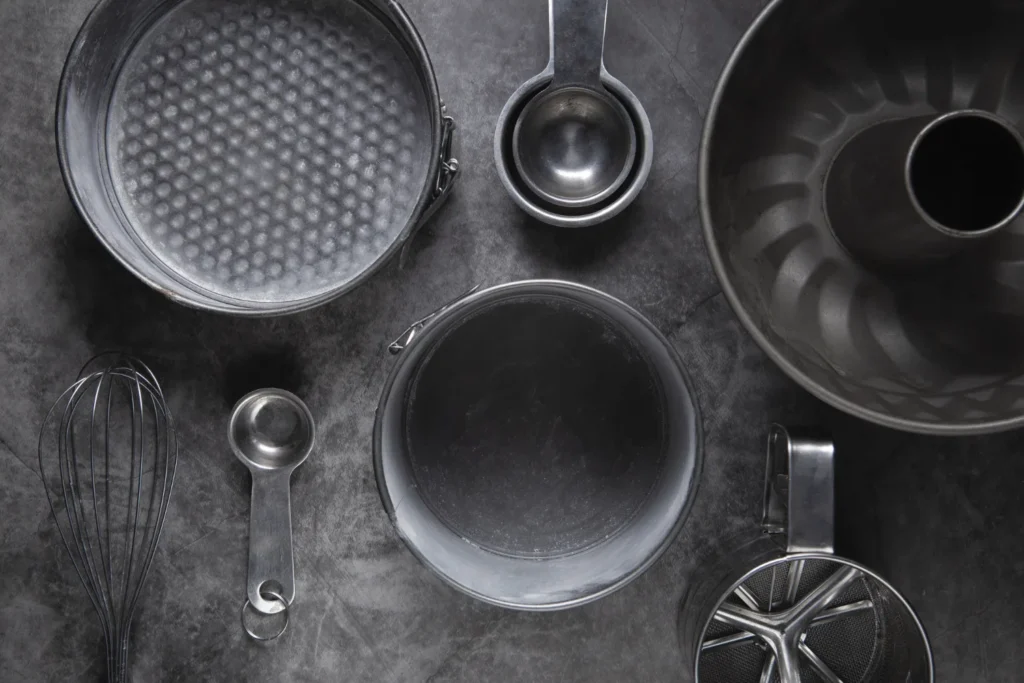
Every well-stocked kitchen tends to rely on a handful of workhorse pieces, no matter how big or small the collection is.
Here’s what shows up in nearly every kitchen, and why each one earns its spot.
- Frying pan or skillet, your go-to for eggs, searing meat, and quick weeknight meals
- Saucepan, ideal for sauces, reheating soups, and boiling smaller portions
- Stockpot, built for big-batch cooking like stock, pasta, and soups for a crowd
- Dutch oven, a heavy pot that moves from stovetop to oven for braises and stews
- Sauté pan, deeper than a skillet with straight sides, perfect for dishes with liquid
- Griddle pan, flat and wide for pancakes, grilled sandwiches, and searing multiple items at once
You don’t need every piece on day one, but this list gives you a solid starting point for almost any recipe you’ll attempt.
Specialty Pots and Pans Worth Knowing About
Beyond the Basics
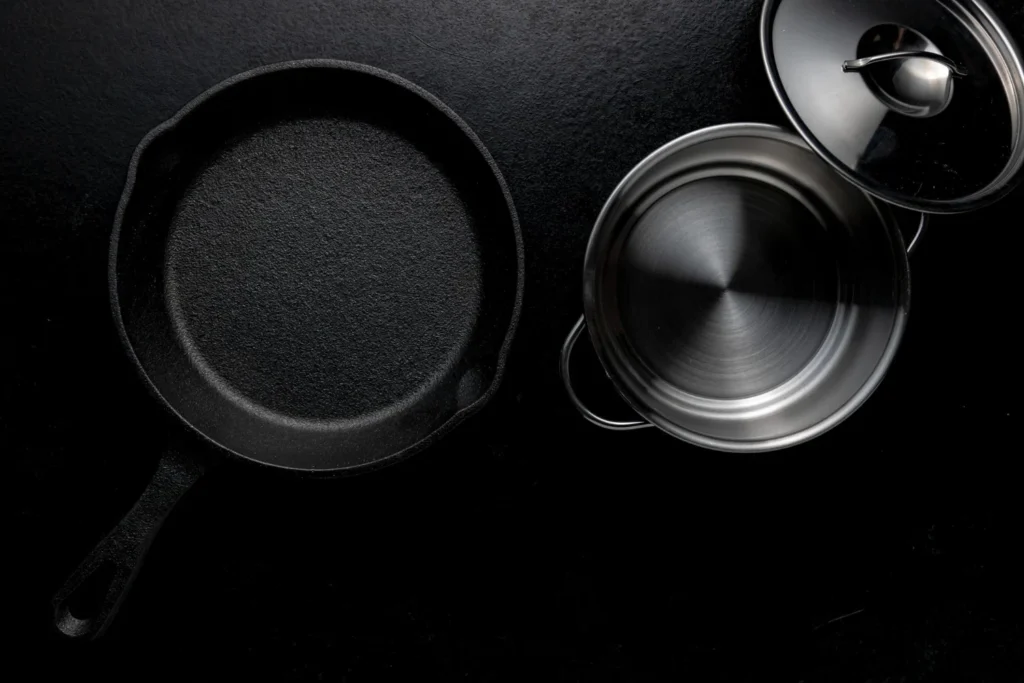
Once you’ve got the essentials covered, a few specialty pieces can round out your collection for more specific cooking styles.
These aren’t must-haves for every kitchen, but they make certain tasks noticeably easier.
- Wok, designed for high-heat stir frying with its curved sides and wide surface
- Grill pan, ridged to mimic outdoor grill marks and drain excess fat
- Crepe pan, shallow and flat for thin, delicate pancakes and crepes
- Roasting pan, large and sturdy for whole chickens, turkeys, and big roasts
Matching the Pan to the Job
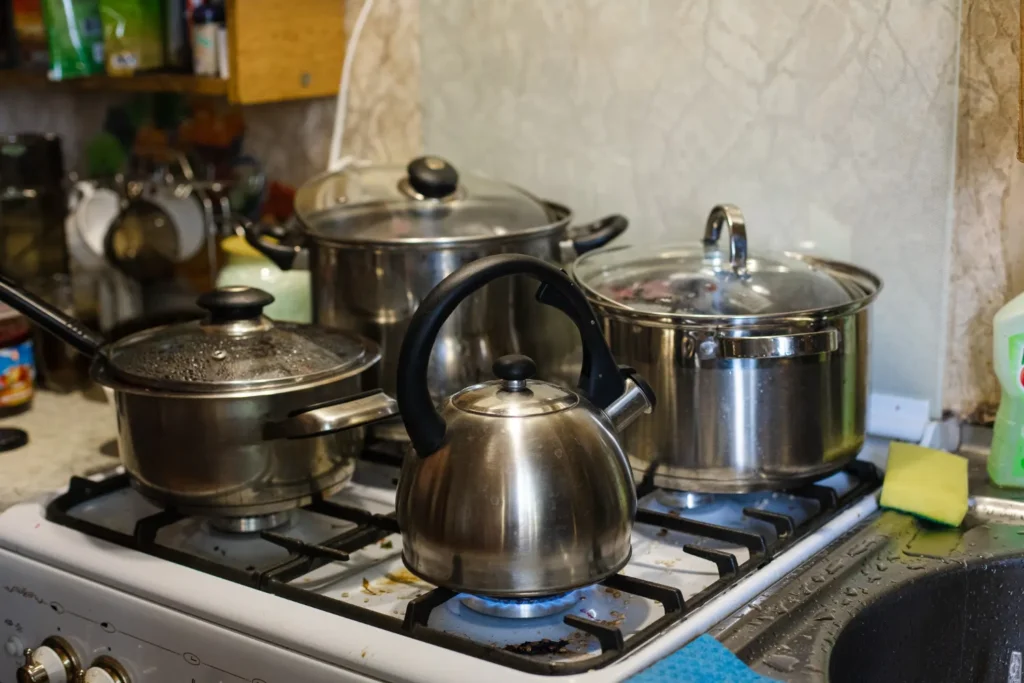
The biggest mistake beginners make is using one pan for everything, which leads to uneven cooking and frustrating results.
A stockpot won’t sear a steak well, and a skillet won’t hold enough liquid for a big pot of soup.
Learning which types of pots and pans fit which task saves you time, reduces waste, and honestly makes cooking more enjoyable.
Start with the essentials, add specialty pieces as your cooking habits demand them, and you’ll build a collection that actually gets used instead of collecting dust in a cabinet.