
You’ve probably heard the promise a hundred times: crispy fries, crunchy chicken, golden vegetables, all with a fraction of the oil deep frying needs.
So how does an air fryer work well enough to pull that off? The short answer is it doesn’t fry your food at all, it convection-cooks it at high speed.
Once you understand the mechanics behind it, you’ll cook smarter and get better results from every batch you make.
Let’s walk through exactly what’s happening inside that compact countertop unit every time you press start.
The Basic Mechanics Behind Every Air Fryer
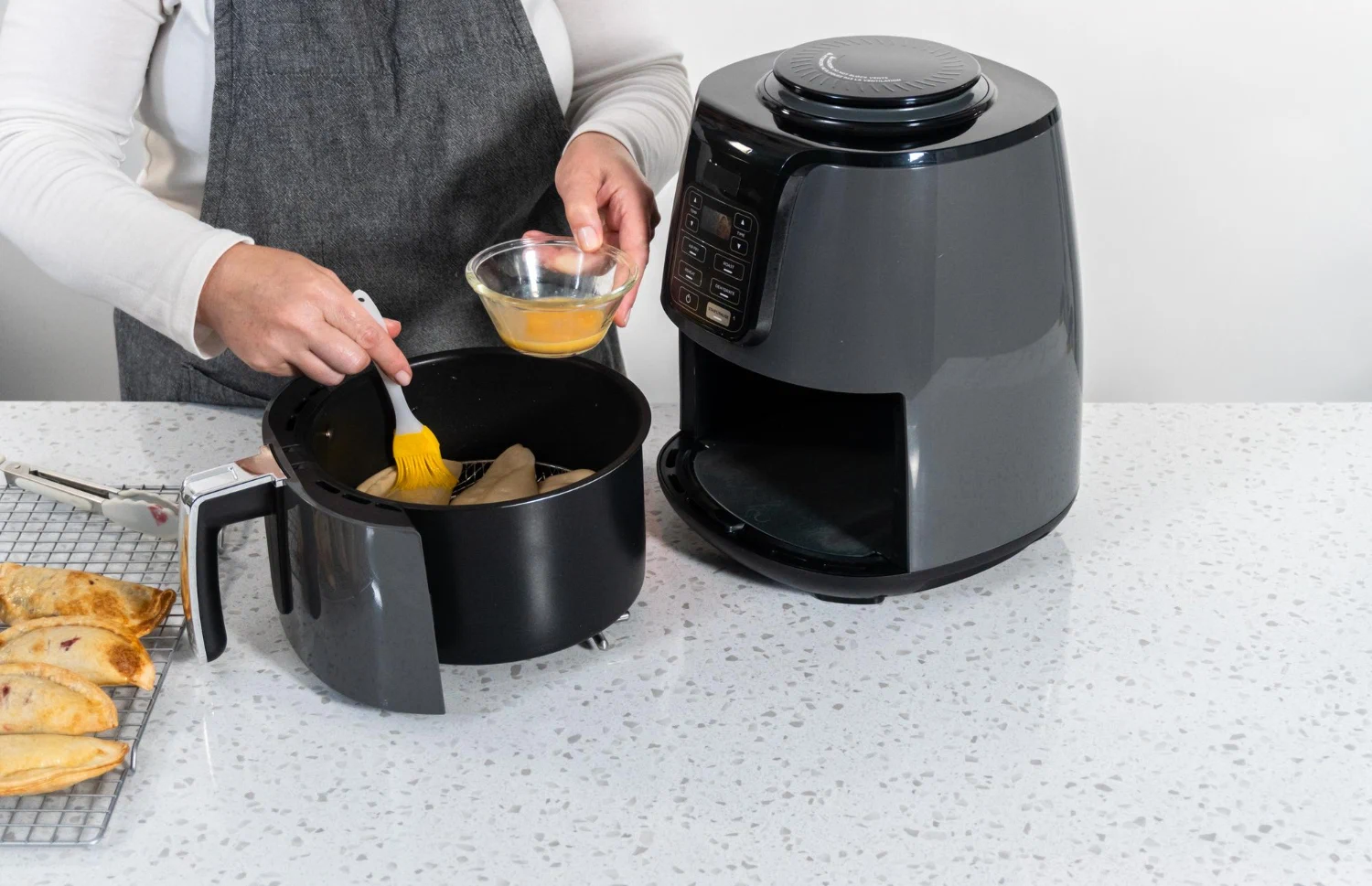
An air fryer is essentially a small, high-powered convection oven built into a compact basket design.
Inside sits a heating element, usually near the top of the unit, that heats the air to temperatures often reaching 400 degrees Fahrenheit or higher.
Right below or beside that heating element, a powerful fan pulls in the hot air and circulates it rapidly around your food.
This constant, fast-moving airflow is the real engine behind an air fryer, not the heat alone.
Because the air moves so quickly, it strips away moisture from the food’s surface at a much faster rate than a standard oven can manage.
That rapid moisture loss is what creates the crisp, golden exterior you associate with deep frying, minus the oil bath.
Your food sits in a perforated basket, which lets hot air flow underneath and around it instead of just from one direction.
That 360-degree airflow is why air fryer results often beat a regular oven, even at similar temperatures.

Why Your Food Gets So Crispy
The crisping effect comes down to something called the Maillard reaction, the same chemical process that browns a seared steak or toasted bread.
High heat plus rapid airflow triggers that reaction on the surface of your food quickly, locking in a crunchy shell while the inside stays tender.
A thin coat of oil helps this process along, since oil conducts heat efficiently and helps the surface brown evenly.
That’s why most air fryer recipes call for just a tablespoon or two of oil, rather than the cups needed for traditional frying.
The Role of the Basket Design
The basket isn’t just a container, it’s a core part of how the whole system works.
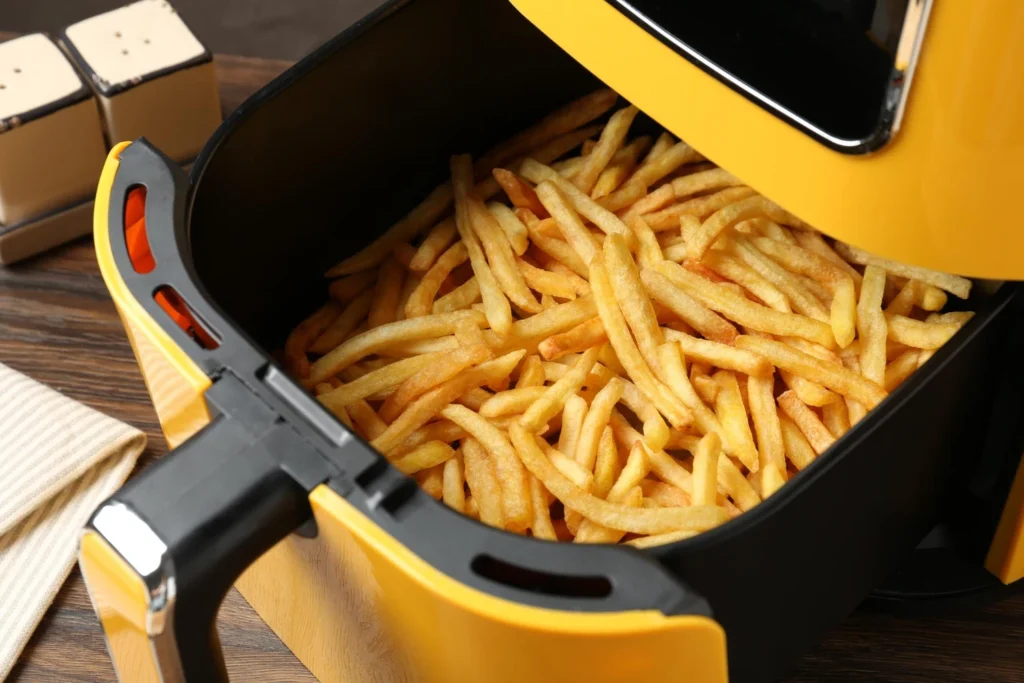
Its perforated bottom and sides let hot air pass completely around your food instead of pooling underneath it.
This design also lets excess fat and moisture drip down and away from your food as it cooks, which helps keep the texture crisp instead of soggy.
Shaking or flipping food halfway through cooking helps expose every side to that same airflow, giving you a more even result.
Temperature and Timing Basics
Preheating
Most air fryers benefit from a short preheat, usually two to five minutes, so your food hits hot air the moment it goes in.
Cook Temperature
Standard temperatures range from 350 to 400 degrees Fahrenheit depending on what you’re making, with delicate foods sitting lower and heartier items sitting higher.
Cook Time
Air fryers cook faster than conventional ovens, often cutting total time by 20 to 25 percent for the same dish.
Batch Size
Overcrowding the basket blocks airflow and leads to uneven cooking, so smaller batches in a single layer give you the crispiest results.
Common Questions About How Air Fryers Work
People often assume an air fryer uses some kind of special frying technology, but it’s really just fast, hot air doing the work.
That’s also why air fryers use so much less oil than deep frying, since the crisping comes from airflow and heat rather than submersion in fat.
Some units include additional features like rotisserie functions or dehydrating settings, but the core mechanism stays the same across nearly every model.
Once you understand how does an air fryer work at its core, you’ll know exactly why shaking the basket, avoiding overcrowding, and using a light oil coat make such a big difference in your results.